
Dripping Faucets Stopped Before Damage Spreads
Faucet Installation and Repair in Lyndhurst, Charlottesville, Staunton, Harrisonburg, and surrounding areas for leaking, dripping, or worn fixtures in kitchens and bathrooms
Cabinet bases and subfloors beneath kitchen and bathroom sinks in older Lyndhurst and Waynesboro homes are frequently original to the structure, built from materials that absorb moisture slowly and show visible damage only after a slow drip has been running for a long time. A faucet that drips at the spout or seeps at the base often doesn't look urgent, but it consistently delivers water onto the cabinet floor every hour the fixture is in service. Miller Plumbing Solutions, LLC fixes faucet leaks and installs new fixtures, and finding the exact source of the leak is the first step before anything is taken apart.
The crew identifies whether the leak originates from the cartridge, the washer and seat, or the supply connection at the base of the fixture—each failure point requires a different repair and pulling the wrong component wastes time without resolving the leak. For cartridge-style faucets, the cartridge is pulled, inspected, and replaced if it has worn out of spec. For compression faucets, which are still common in homes built before ball and cartridge designs became standard, the seat is checked for pitting and resurfaced or replaced if the washer alone won't create a clean seal. For new installs, the supply lines are checked before the fixture is connected and the homeowner is shown the fixture options that fit the existing supply configuration.
Have a technician identify the specific leak source at your fixture before the drip has time to work into the cabinet structure below.
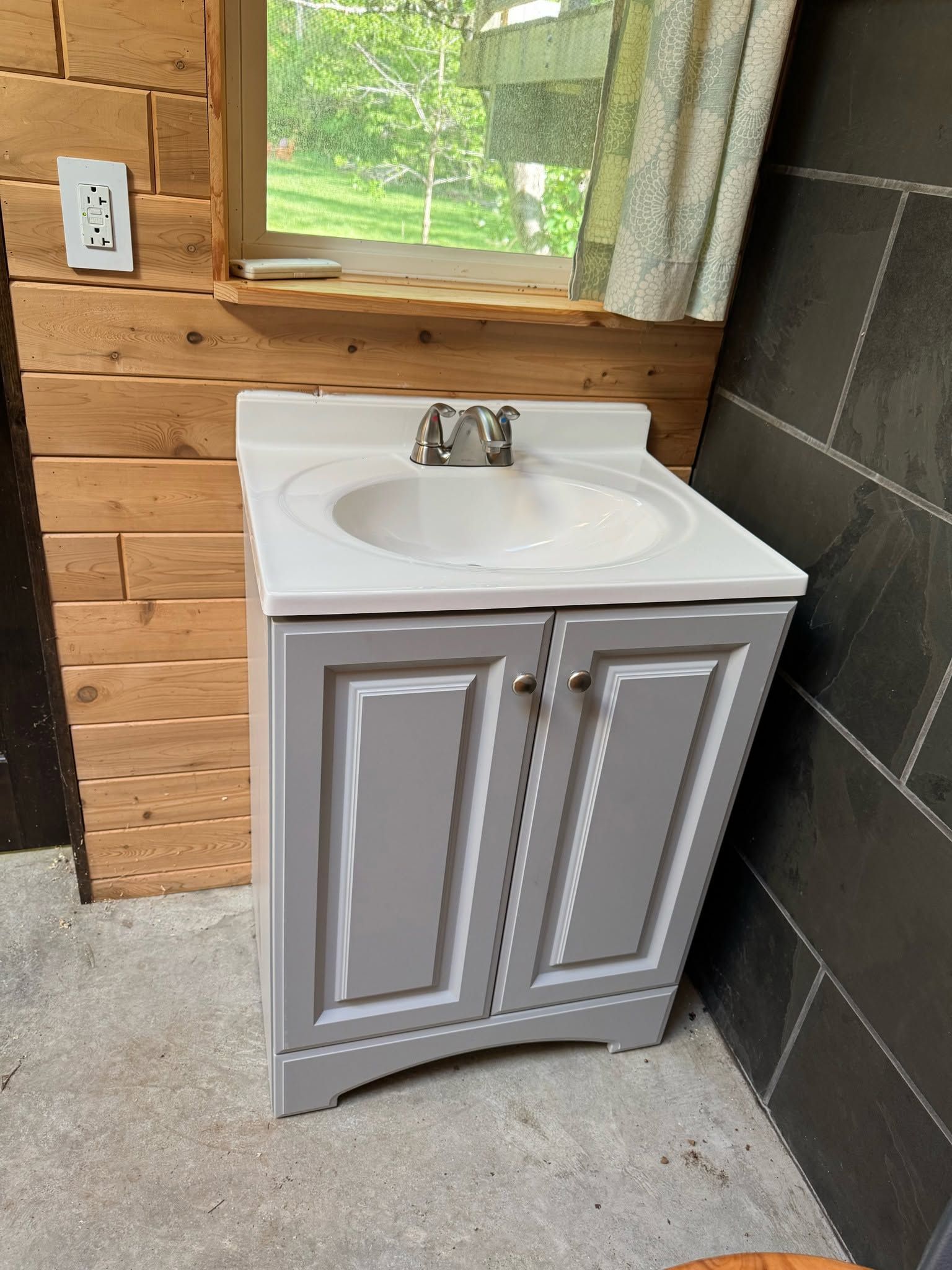
What Proper Faucet Repair Requires
Diagnosing a faucet leak correctly depends on distinguishing between the three places it can originate: the valve mechanism inside the body, the supply line connection underneath, and the deck seal between the fixture base and the sink surface. A drip from the spout with the handle fully off points to the internal valve—cartridge, ceramic disc, or ball depending on the faucet type. Seeping at the base of the handle stem indicates a worn O-ring around the stem rather than a valve failure. Moisture under the cabinet without a visible spout drip points to the supply connection. Each of those diagnoses changes which components are accessed and replaced.
After the repair is complete, the spout holds fully dry with the handle in the off position, the handle operates without stiffness or wobble, and the cabinet floor below the supply connections is dry after the water is restored. Older compression faucets that have had a worn seat resurfaced alongside a new washer seal noticeably smoother than they did before, requiring less handle torque to stop the drip completely.
For new faucet installations, the existing supply line length and shutoff valve condition determine whether the new fixture can be connected directly or whether the supply lines need to be replaced at the same time. Braided stainless supply lines have a defined service life and are typically replaced whenever a faucet is swapped out, since the labor to access the connection is already part of the installation.
What Homeowners Ask About Faucet Work
The questions below cover how faucet repairs are diagnosed and performed, what determines whether a repair or full replacement is the right call, and what to look for when the job is finished.
How does the crew determine whether the faucet needs a repair or a full replacement?
The valve mechanism is inspected once disassembled—if the cartridge or ball is worn but the faucet body is intact, a component replacement restores the fixture fully; if the seat inside a compression faucet is pitted beyond what resurfacing can correct, or if the valve body itself has cracked, replacement of the full fixture is the more reliable outcome.
What is the difference between a cartridge and a compression faucet repair?
A cartridge faucet is repaired by pulling and replacing the entire cartridge as a single unit, while a compression faucet requires replacing the rubber washer at the stem tip and inspecting the brass seat it presses against—if the seat is grooved or pitted, it has to be resurfaced with a seat wrench or replaced before a new washer will seal correctly.
Why do older homes in Lyndhurst commonly have compression faucets rather than cartridge or ball types?
Compression faucets were the standard residential design installed through much of the mid-twentieth century, so homes built before the 1980s frequently still have their original fixtures or compression-style replacements that were installed to match the existing valve bodies in the supply risers.
What should be checked before connecting a new faucet to the existing supply lines?
The shutoff valves beneath the sink are operated to confirm they open and close fully, the supply line connections are inspected for corrosion at the ferrule, and the line length is measured against the new faucet's inlet spacing before the old fixture comes off the deck.
How can a homeowner confirm the faucet repair is holding after the water is restored?
With the handle fully in the off position, the spout should produce no drip after a full minute, the base of the faucet where it meets the sink deck should be dry with no seepage, and the shutoff valve supply connections under the cabinet should remain dry through the first several on-off cycles of normal use.
Miller Plumbing Solutions, LLC also repairs and installs faucets in Waynesboro, Charlottesville, Crozet, and Harrisonburg. To have your fixture evaluated and the leak source identified, contact Miller Plumbing Solutions, LLC and describe where the drip is appearing so the technician arrives with the right components for your faucet type.