
Hot Water Restored Without Unnecessary Replacement
Water Heater Installation & Repair in Lyndhurst, Charlottesville, Staunton, Harrisonburg, and surrounding areas for units that have stopped producing hot water, are leaking, or have shortened their service life through sediment buildup
Tank heaters operating on hard groundwater—common across the Lyndhurst area—face sediment accumulation inside the tank at a pace that softened municipal water doesn't produce. That sediment layer insulates the bottom of the tank from the heating element or burner, forcing the unit to run longer cycles to reach temperature and accelerating the corrosion of the anode rod that would otherwise protect the tank lining. The result is a unit that underperforms years before its rated lifespan and often fails without much warning. Miller Plumbing Solutions, LLC handles both repairs and full replacements, starting with a diagnosis rather than an assumption.
A repair call begins with checking the gas or electric supply, the thermostat setting, the heating element or burner assembly, and the pressure relief valve. Each component is tested in sequence so the actual failure point is confirmed before any part is replaced. If the diagnosis indicates that replacement makes more sense than continued repair—particularly for units where the tank lining itself is compromised—the technician walks through a clear comparison of tank and tankless options, the full installation scope, and the price before any work begins.
Request a service appointment to have your water heater evaluated and receive a specific diagnosis before deciding between repair and replacement.
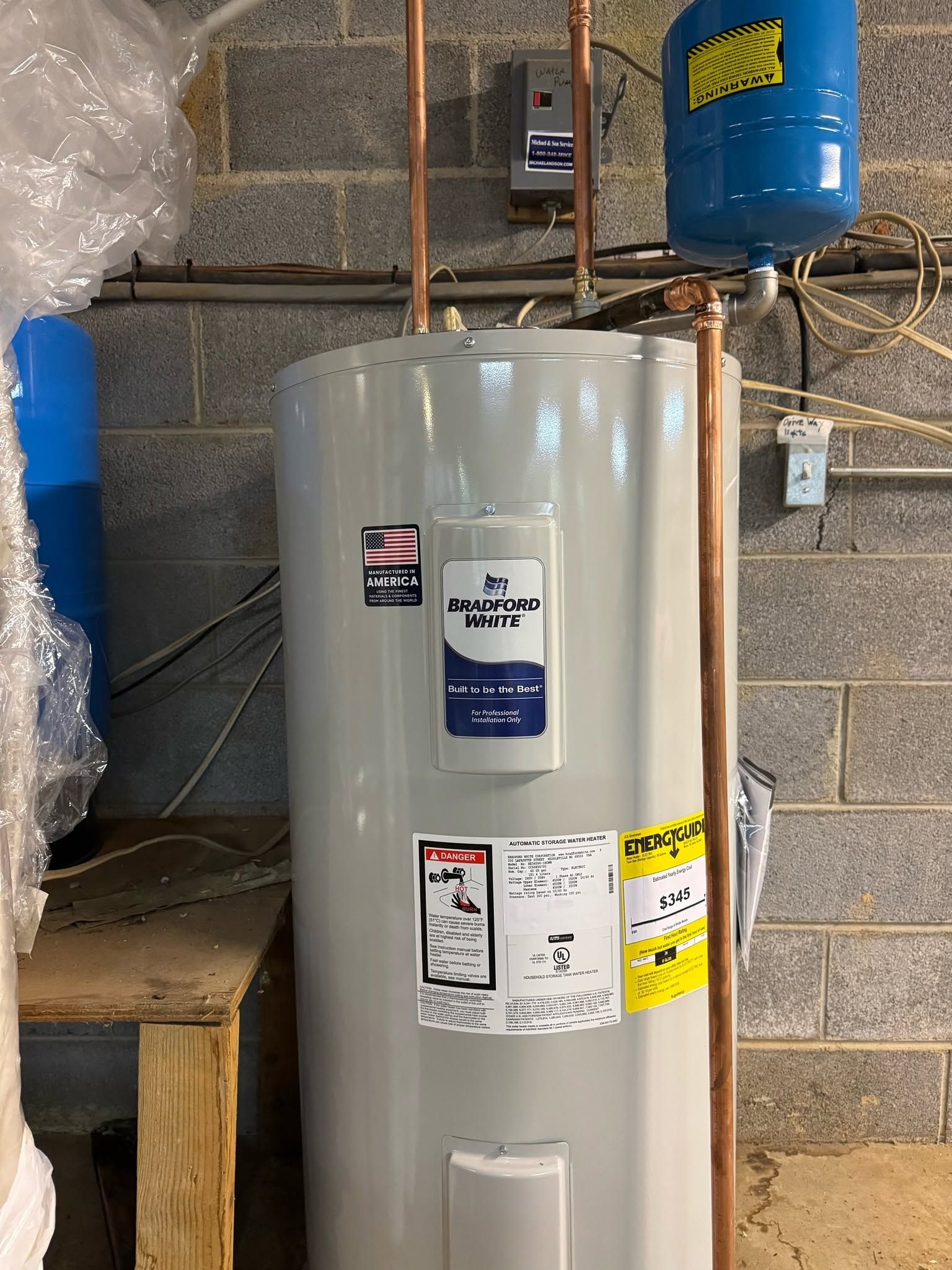
How Water Heater Diagnosis Addresses the Actual Problem
Not every water heater problem requires replacing the unit. A thermostat set below the recovery threshold, a burned-out lower element on an electric unit, or a pilot assembly that isn't holding flame on a gas model are all conditions that can be corrected without pulling the tank. The pressure relief valve is also checked on every call—a valve that discharges intermittently or shows mineral deposits around the discharge tube indicates either excess pressure or a valve that has begun to fail, both of which need to be addressed regardless of what else is found.
After a successful repair, the difference is immediate and specific: water at fixtures reaches the set temperature within the expected draw time, and the unit cycles normally without running continuously or recovering slowly. For a full replacement, Miller Plumbing Solutions, LLC connects the new unit, tests the pressure relief valve, confirms the temperature setting, and checks for any supply line or venting issues before the job is finished.
Tankless units are an option worth understanding for homes on well water with high mineral content, but they also carry higher upfront installation costs and require appropriate gas line capacity or electrical service. The technician explains those trade-offs based on the home's existing infrastructure so the decision is based on actual conditions rather than a general recommendation.
What Property Owners Ask About the Work
The questions below address how water heater repair and installation is performed, what gets inspected during a diagnostic call, and what to expect when a replacement becomes the right choice.
What components are tested during a water heater repair call?
The technician checks the power or gas supply first, then the thermostat, the heating element or burner assembly, and the pressure relief valve—working through each in sequence to isolate the actual failure rather than replacing parts speculatively.
How does sediment buildup affect a tank heater's performance over time?
Sediment that accumulates at the tank bottom acts as an insulating layer between the heat source and the water, causing longer heating cycles, increased energy use, and accelerated wear on the tank lining and anode rod—shortening the unit's effective service life.
When does repair stop making sense and replacement become the better choice?
When the tank lining shows signs of internal corrosion, when the unit requires multiple component replacements within a short period, or when the age of the unit puts it near or past its expected service life, replacement typically provides more reliable long-term performance than continued repair.
What does the installation process involve when a tank is being replaced?
The old unit is drained and disconnected from the supply lines and the gas or electrical source, the new tank is positioned and connected, the pressure relief valve is installed and its discharge line is routed correctly, and the system is tested under normal operating conditions before the technician leaves.
Why does the anode rod matter for homes on well water in Lyndhurst?
The anode rod is a sacrificial metal component that corrodes in place of the tank lining—on hard well water, it depletes faster than it would on softened or municipal water, which means the tank itself begins to corrode sooner if the rod isn't inspected and replaced on a reasonable interval.
Miller Plumbing Solutions, LLC also installs and repairs water heaters in Charlottesville, Crozet, Harrisonburg, and Waynesboro. Emergency service is available for households that have lost hot water entirely—call (434) 437-0123 to schedule a diagnostic visit or to discuss replacement options based on your home's current setup.