
Water Heaters Sized and Installed to Match Demand
Water Heater installation and service in Lyndhurst, Charlottesville, Staunton, Harrisonburg, and surrounding areas for households where the existing unit is undersized, leaking, or overdue for replacement
A significant number of older homes in Augusta and Albemarle counties are still running original tank water heaters that were sized for smaller households than occupy them today. These units often reach the end of their service life quietly—leaking at the base, recovering slowly between uses, or failing to supply enough hot water for the household's actual demand before anyone identifies the unit as the source of the problem. Miller Plumbing Solutions, LLC works through the options, sizes the replacement correctly, and makes sure the homeowner understands how the new system works before the crew leaves.
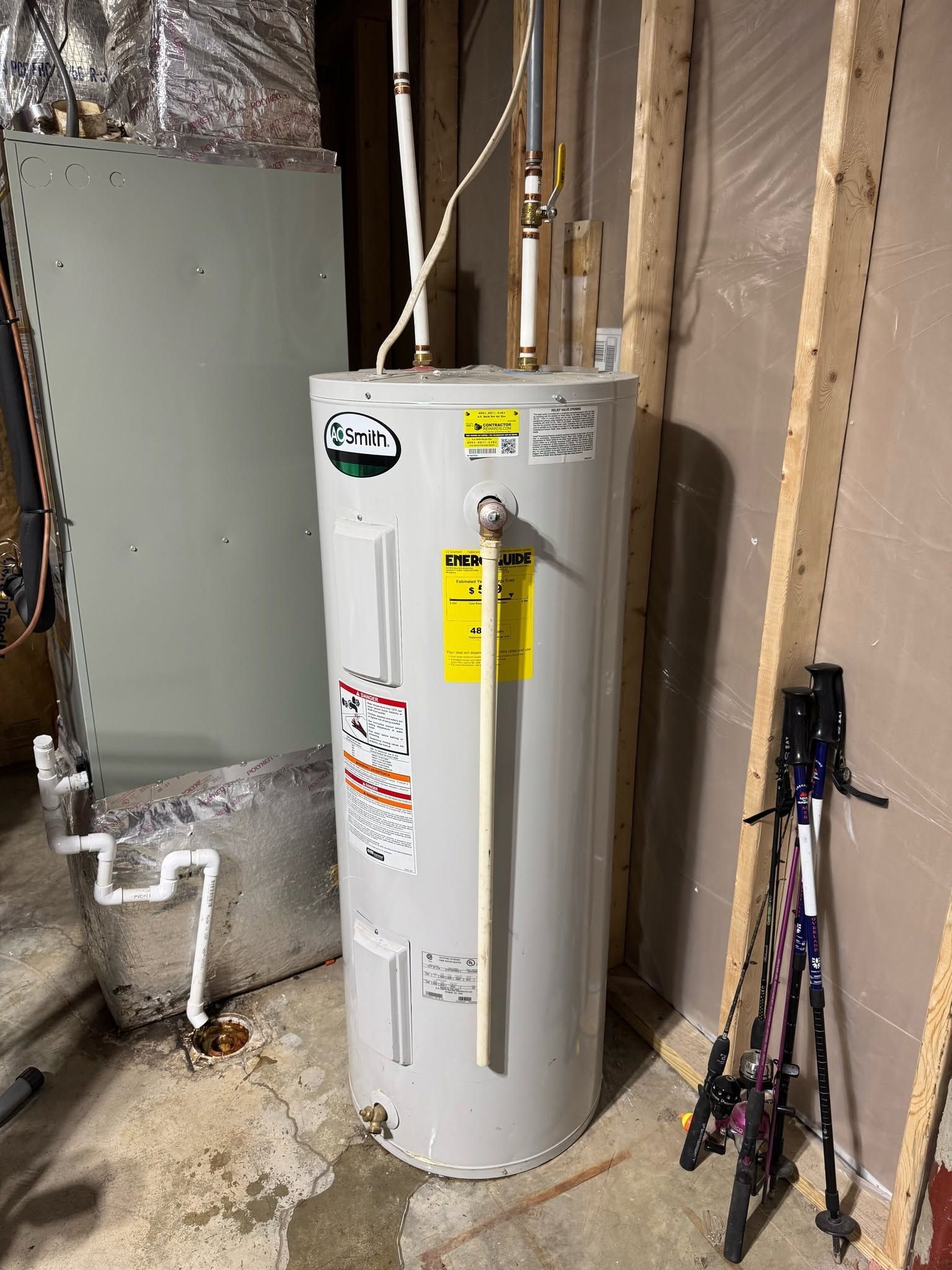
The installation sequence begins with confirming the existing fuel type, venting configuration, and connection locations so there are no surprises once the old unit comes out. From there, the crew recommends a tank or tankless unit based on measured household demand rather than a catalog default. Installation includes the pressure relief valve, an expansion tank where the supply configuration requires one, and a walkthrough of flushing intervals and temperature settings that keep the unit performing as intended. Skipping the expansion tank in a closed system is a common installation shortcut that leads to pressure fluctuations and premature valve failures—it is included where the plumbing layout calls for it.
Arrange a unit assessment to review your current water heater's output against your household's actual hot-water demand.
Why Proper Sizing Determines Long-Term Performance
Sizing a replacement water heater involves calculating the peak hourly demand the household generates—how many fixtures run simultaneously and how quickly recovery needs to happen—rather than simply matching the gallon capacity of the old unit. A tank that replaced a smaller household's original heater a decade ago may still be undersized for a home that has added bathrooms or occupants since then. Tankless units are sized differently, based on flow rate and inlet temperature, which means the selection process isn't interchangeable between unit types.
Once the new unit is in place, the household stops running out of hot water during back-to-back uses, and the recovery time between uses shortens noticeably compared to an aging tank operating at reduced efficiency. Miller Plumbing Solutions, LLC sets the temperature dial and demonstrates the flush procedure so sediment doesn't accumulate and reduce capacity over the first few years of operation—something most homeowners aren't shown during a standard installation.
Older homes in Waynesboro and Staunton frequently have venting configurations that were designed around the original appliance, which means a direct swap for a different fuel type or a tankless unit may require venting modifications before the new installation is code-compliant. The crew identifies those requirements during the initial inspection so the scope of the job is clear before work begins rather than discovered mid-installation.
What Homeowners Ask About Water Heater Work
The questions below focus on how water heater installation and replacement are actually performed, what decisions get made during the job, and what homeowners can check afterward to confirm the unit is operating correctly.
How does the crew determine whether a tank or tankless unit fits the household?
The evaluation compares peak hot-water demand—the number of simultaneous fixture uses at the busiest time of day—against each unit type's recovery rate or flow capacity, rather than defaulting to the same format as the unit being replaced.
What does an expansion tank do and when is one required?
An expansion tank absorbs the pressure increase that occurs when heated water expands in a closed plumbing system; without one in a closed system, that pressure cycles through the relief valve and reduces its service life significantly.
Why do older Augusta County homes often need additional work beyond a straight swap?
Many original installations in homes from the mid-twentieth century used venting materials and configurations that don't meet current code for higher-efficiency units, so the vent run may need to be modified before the new heater can be connected and inspected.
How should a homeowner flush a tank water heater and how often does it need to be done?
Connecting a hose to the drain valve at the base of the tank and running water through until it clears removes sediment that settles and insulates the element from the water, reducing efficiency—annual flushing keeps the element in direct contact with the water it is heating.
What indicates the new water heater is installed and operating correctly?
The pressure relief valve should not be seeping or dripping during normal operation, the unit should reach set temperature within the manufacturer's recovery window, and there should be no visible moisture at the base, connections, or venting joints after the first full heating cycle.
Miller Plumbing Solutions, LLC also installs and services water heaters in Charlottesville, Crozet, Harrisonburg, and Waynesboro. Contact Miller Plumbing Solutions, LLC directly to have your existing unit inspected and your household's hot-water demand evaluated before selecting a replacement.