
Supply Line Leaks Found Without Unnecessary Demolition
Water Line Repair in Lyndhurst, Charlottesville, Staunton, Harrisonburg, and surrounding areas for pinhole leaks, pressure loss, and aging galvanized or early plastic supply lines
Damp floors with no visible source and water bills that climb without explanation are the most common ways a failing supply line announces itself in older homes. Galvanized steel and early plastic supply lines—both common in homes built across Augusta County before copper and cross-linked polyethylene became standard—reach the end of their service life through internal corrosion and joint failure rather than a single dramatic break. Miller Plumbing Solutions, LLC tells every homeowner what failed, what the repair involves, and what alternatives exist before any work begins.
The repair sequence starts with isolating the affected section and using pressure testing to confirm the location of the failure when it isn't visible at the surface. Once the leak is located, the crew opens only the section of wall, floor, or ceiling required to access it—not the entire run—and makes the repair using new fittings and pipe matched to the rest of the supply system. Before the opening is closed, the repaired line is pressure tested again to confirm the fix holds under working conditions. Homeowners are walked through what was found and what was done so the repair isn't a black box.
Request an on-site supply line inspection to identify the source of unexplained moisture or pressure loss at your property.
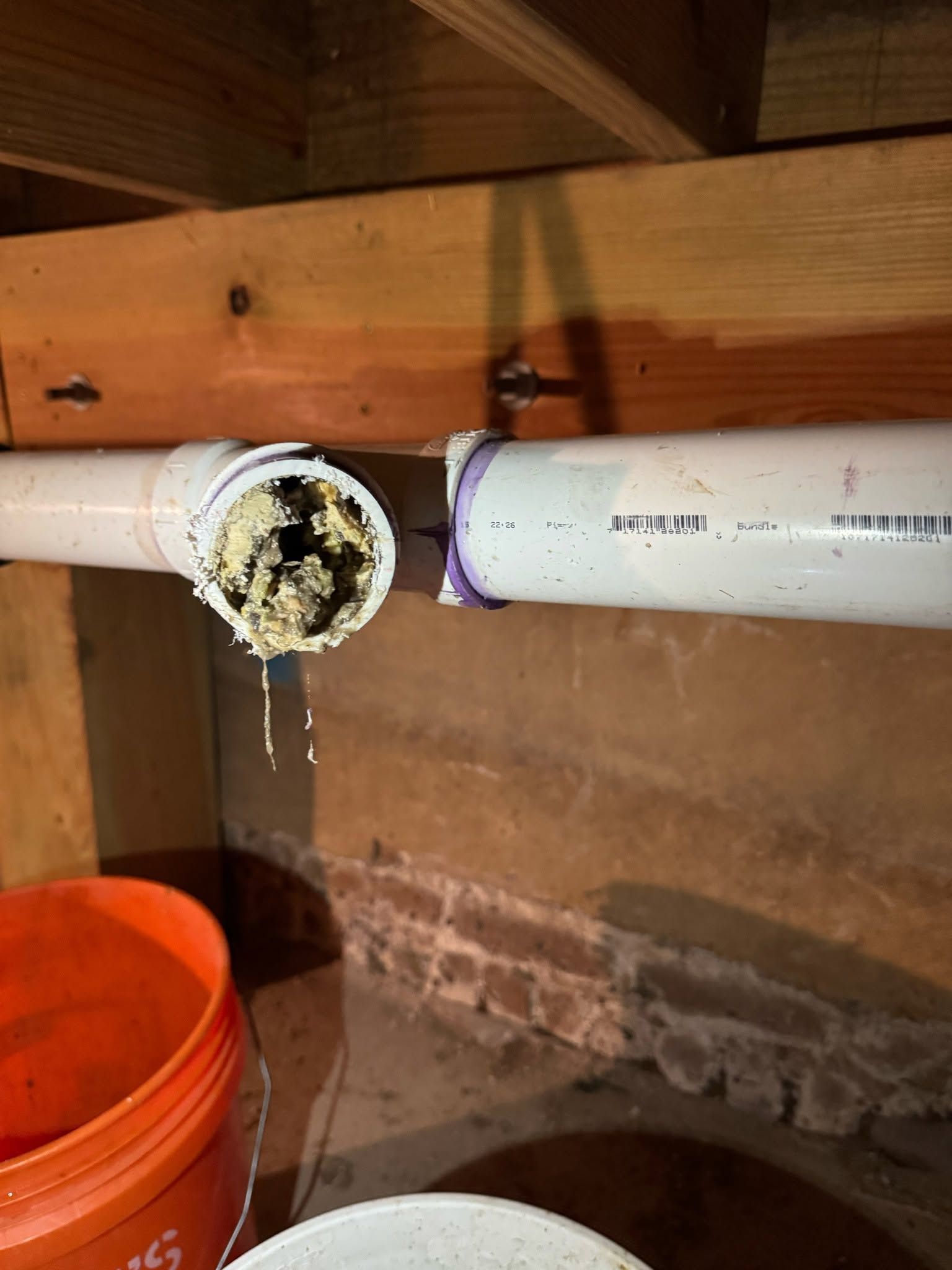
How Water Line Repair Addresses the Source, Not the Symptom
Pressure testing works by sealing a section of line, applying a measured pressure, and monitoring whether that pressure holds over time. A drop confirms there is a leak within the isolated section without requiring the entire run to be exposed. This approach matters most in finished spaces—kitchens, bathrooms, and finished basements—where opening the wrong section adds unnecessary repair work to the job. When galvanized pipe is involved, the interior corrosion that causes pinhole leaks is usually distributed along a significant length of pipe rather than concentrated at one point, which affects whether a targeted repair or a full-run replacement is the more practical option.
After the repair is complete and the line is confirmed to hold pressure, the visible signs of the leak—damp drywall, discolored flooring, soft subfloor material—stop worsening. What the homeowner notices going forward is that water pressure at affected fixtures returns to normal and the water meter stops running between uses. Miller Plumbing Solutions, LLC documents what was found and what was replaced so the homeowner has a clear record of the supply line's current condition for future reference.
In Lyndhurst and surrounding areas, homes where original galvanized runs were partially updated at some point often have mixed-material supply systems where newer copper or plastic sections are still connected to older galvanized segments. Those transition fittings are a common secondary failure point and are inspected as part of the repair scope whenever mixed materials are present in the affected run.
Answers About How Water Line Repair Is Done
Supply line repairs raise questions about access, scope, and what happens if the problem turns out to be more widespread than the visible symptom suggests. The answers below address how those decisions are made during the work itself.
How is the exact location of a hidden leak identified without opening the entire wall?
The affected line is isolated at shutoff valves and pressurized; a pressure gauge monitors the sealed section over a set interval, and a drop in reading confirms the leak is within that segment, narrowing the access point before any opening is made.
What determines whether a section repair or a full line replacement is the right approach?
When the pipe material is galvanized steel with visible internal corrosion, a single pinhole is typically a sign that the rest of the run is in similar condition—opening one small section often reveals that the surrounding pipe walls are too thin to hold a fitting reliably, making full replacement more practical than repeated targeted repairs.
Why does the pipe material in older Lyndhurst homes affect the repair method?
Galvanized pipe corrodes from the inside outward, which means the exterior can look intact while the interior diameter has narrowed significantly from mineral deposits and rust—this affects both the pressure loss the homeowner experiences and the threading quality available at fittings when making a splice repair.
What does the pressure test after repair confirm?
With the repaired section reconnected and the line brought back to working pressure, a stable gauge reading over a timed interval confirms the new fittings are sealed and the surrounding pipe didn't develop a secondary failure point when pressure was restored.
How should a homeowner prepare for a supply line repair in a finished space?
Clearing access to the area beneath or behind the suspected leak point—removing cabinet contents, stored items, or furniture—allows the crew to begin assessment immediately and reduces the total time the water supply to that section of the house needs to be shut off.
Miller Plumbing Solutions, LLC also repairs water supply lines in Crozet, Charlottesville, Harrisonburg, and Waynesboro. Reach Miller Plumbing Solutions, LLC to describe what you're seeing and set up an inspection of the affected line before the damage to surrounding materials worsens.