
Kitchen Drains That Work Without Constant Resetting
Garbage Disposal Installation & Repair in Lyndhurst, Charlottesville, Staunton, Harrisonburg, and surrounding areas for jammed units, leaking flanges, and kitchens built without a disposal in the original drain layout
Adding a garbage disposal to a kitchen that wasn't designed for one involves more than mounting the unit under the sink. Many older Lyndhurst kitchens were built with drain configurations sized and routed for simple P-trap layouts, and the existing sink flange may not be compatible with a disposal mount without modification. Miller Plumbing Solutions, LLC evaluates the existing drain setup and flange condition before any installation begins, so the work accounts for what's actually under the sink rather than what would be ideal. For repairs on units already in place, the crew diagnoses jams, leaks, and electrical faults to determine whether the problem is worth fixing or whether replacement is the more practical answer.
A repair call starts with checking the motor, the reset button, the flange seal, and the drain connection to the trap. That sequence matters because a disposal that hums but won't spin has a different problem than one that trips its reset repeatedly or one that leaks from the flange rather than the drain line. Installations include mounting the unit to the sink flange, connecting the drain to the existing trap configuration, wiring the electrical connection, and running the disposal through a full cycle to confirm it drains cleanly before the job is closed.
Schedule a visit to have your disposal diagnosed or to find out what an installation would involve given your kitchen's current drain configuration.
The Difference Between a Repair and a Replacement Decision
A disposal that jams repeatedly isn't always a sign the unit is failing—foreign objects lodged in the grinding chamber, a worn impeller plate, or a partially blocked trap can produce the same symptom as a motor that's reaching the end of its service life. The technician uses the reset button response, motor amperage, and the condition of the grinding components to separate a mechanical fix from a unit that's genuinely worn out. Leaks at the flange are a separate category: a deteriorated sink flange gasket or a mount that has worked loose over time can be resealed without replacing the disposal body itself.
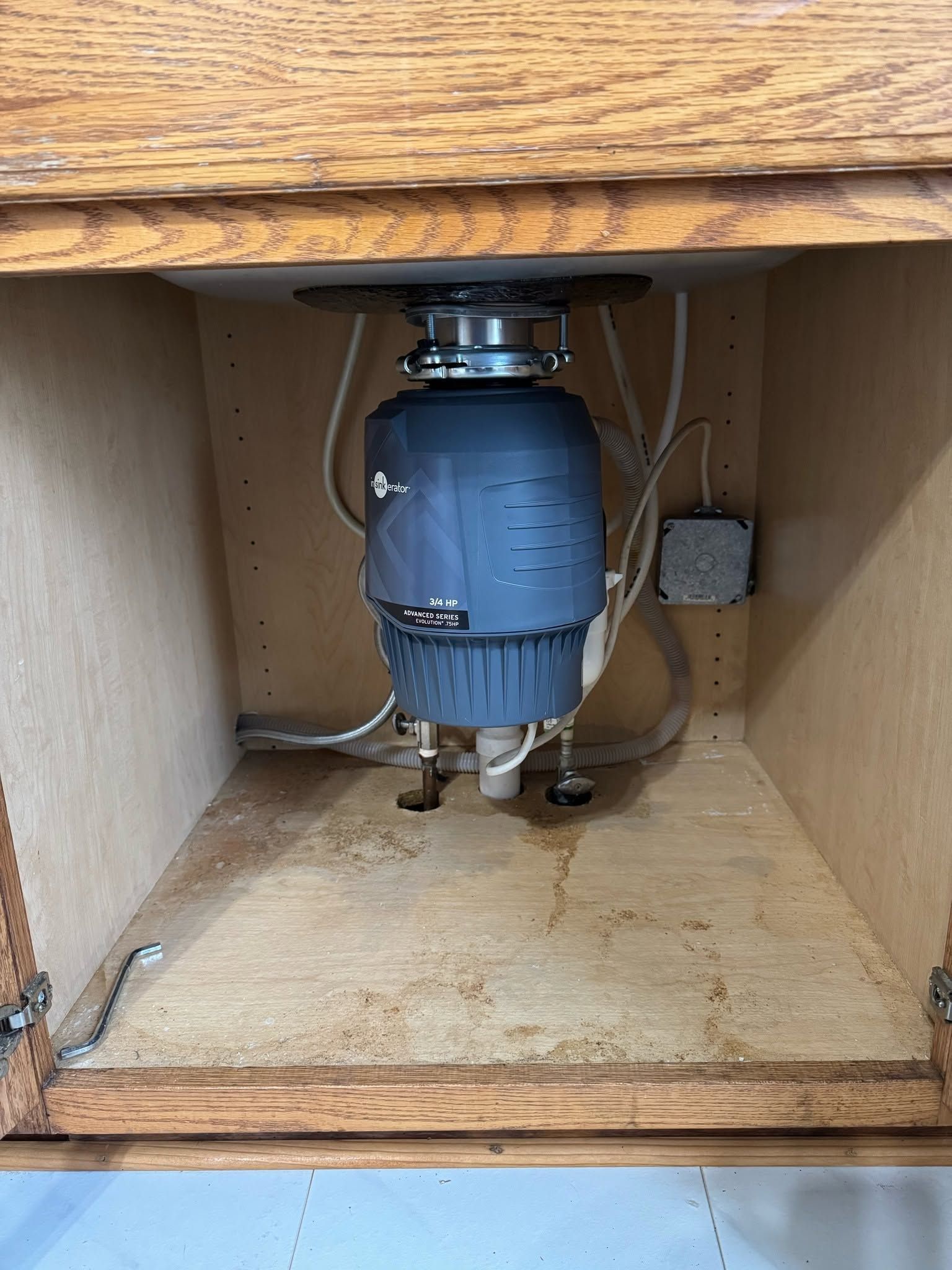
After a successful repair, the disposal runs without tripping its reset, drains cleanly without backing up into the second basin on a double sink, and doesn't produce the grinding noise associated with a foreign object still in the chamber. For a new installation in a kitchen that didn't previously have a disposal, the finished result includes a mounted unit, a correctly vented drain connection, and a tested electrical circuit—and there's no leak at the flange after the sink has been used normally.
Miller Plumbing Solutions, LLC holds Virginia Grade A contractor status and is licensed, bonded, and insured. Disposal size—measured in horsepower—affects how the unit handles harder food waste, and the technician explains the trade-off between motor size and what the existing drain configuration can handle before any unit is selected.
Answers About How the Work Is Done
These questions cover how disposal repairs and installations are approached, what gets inspected during a diagnostic call, and what the finished installation should look like in a kitchen that was built without one.
How does a technician determine whether a disposal is worth repairing?
The motor's response to the reset button, its amperage draw under load, and the condition of the grinding components are evaluated together—a unit that draws excessive amperage without spinning, or one where the motor windings have failed, is typically beyond cost-effective repair.
What gets checked when a disposal leaks from the bottom rather than the drain connection?
A leak from the bottom of the unit typically indicates an internal seal failure between the motor housing and the grinding chamber, which generally means the unit needs to be replaced rather than resealed at a single joint.
How is a disposal installation handled in a Lyndhurst kitchen that didn't originally have one?
The existing drain configuration is assessed to confirm the trap arm location and venting are compatible with a disposal outlet, the sink flange is inspected and replaced if needed, and the electrical connection is verified before the unit is mounted and the drain is connected.
Why does the trap connection matter for a disposal installation?
A disposal discharges horizontally into the trap arm, and if the existing trap arm is positioned too high, too far from the outlet, or is already partially blocked, the disposal will drain slowly or back up into the second basin—so the trap configuration is confirmed before the unit is mounted.
What does a correctly installed disposal look like once the job is finished?
The unit sits flush and secure against the sink flange without movement, the drain connection shows no moisture after running water through it, and the disposal completes a full cycle—including the grinding stage—without the motor resetting or the drain backing up.
Miller Plumbing Solutions, LLC also installs and repairs garbage disposals in Charlottesville, Crozet, Harrisonburg, and Waynesboro. Call (434) 437-0123 to describe what your disposal is doing—or not doing—so the technician arrives prepared for the specific repair or installation your kitchen requires.