
Hidden Leaks Located Before Structural Damage Spreads
Leak detection in Lyndhurst, Charlottesville, Staunton, Harrisonburg, and surrounding areas for concealed water loss behind plaster walls, under slabs, and along buried supply lines
Staining on a plaster ceiling, a floor section that has gone soft, or a water bill that climbed without any obvious explanation—these are the visible signs of a leak that has already been running long enough to cause damage somewhere behind finished surfaces. In older homes with original plaster walls and supply lines that have never been replaced, water can travel a considerable distance from the actual failure point before it shows up where you can see it. Miller Plumbing Solutions, LLC locates the source behind walls, under slabs, or along buried lines and explains exactly what is leaking and what it will take to address it—before any opening or repair work is authorized.
Detection starts with a pressure test and a meter review to confirm that water is actively escaping the system and to estimate the loss rate. Recent water use is checked against the meter reading to separate a supply-side leak from a drain-side condition. From there, acoustic listening equipment and a camera are used to narrow the location—particularly useful in Lyndhurst properties where plaster walls and original framing make access points limited and surgical precision in wall opening is worth the diagnostic investment.
Contact Miller Plumbing Solutions, LLC to set up a pressure test and meter review as the first step in identifying where water is escaping your system.
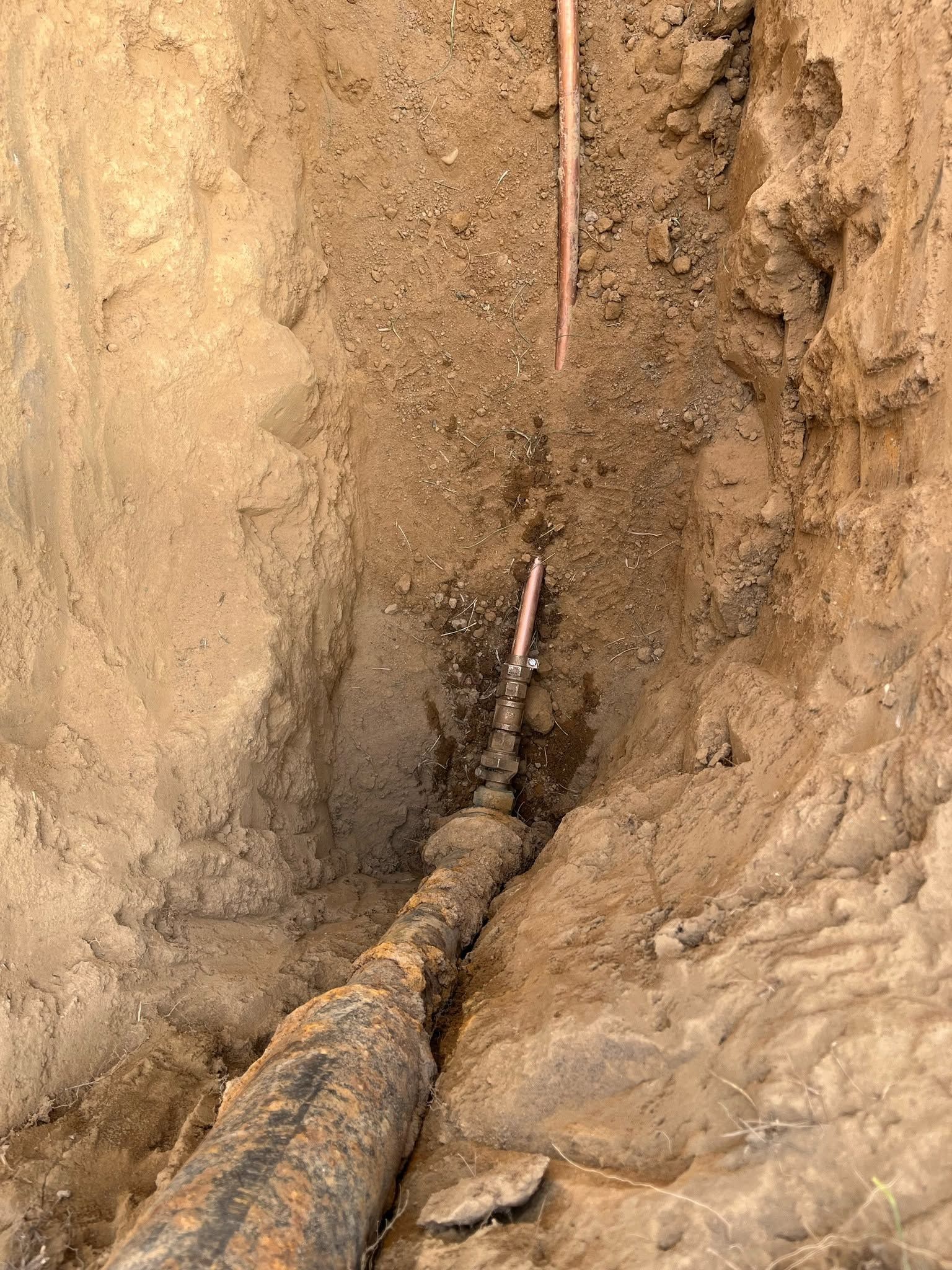
How Leak Detection Addresses a Hidden Problem
Acoustic listening tools work by amplifying the sound a pressurized leak produces as water moves through a breach—different pipe materials and leak sizes produce distinct signatures that an experienced technician can distinguish from normal household pipe noise. Under a slab, the same principle applies with ground-contact probes that pick up the vibration at the surface above the leak rather than requiring the slab to be opened speculatively. The result is a specific location rather than a zone, which determines how much of the floor, wall, or buried line has to be opened to complete the repair.
Once the source is located and repaired, the water bill stabilizes at a level consistent with actual household use, the staining on walls or ceilings stops progressing, and soft or buckled floor material no longer has active moisture underneath it. In cases where the leak ran long enough to affect framing or subfloor material, those conditions are documented at the time of detection so the homeowner understands the full picture before deciding on repair scope.
Not every leak presents as an emergency—some are slow and long-running. Those are often the more damaging ones, because the moisture accumulation inside wall cavities or below flooring has time to affect structural material and create conditions that a fast-moving burst would not. Early detection matters precisely because slow leaks hide well in older construction.
Questions Before Starting Your Project
The following questions address how the detection process works, what equipment is involved, and what homeowners in older properties should understand about concealed leaks before work begins.
What is the first step in finding a leak that has no obvious visible source?
A pressure test isolates whether the supply system is losing pressure, and the meter is checked for movement while all fixtures are closed—if the meter continues to turn, water is escaping the system even if nothing visible confirms it.
How does acoustic detection equipment narrow a leak location under a concrete slab?
Ground-contact probes transmit the vibration that pressurized water creates at the pipe breach through the slab to the surface; the technician moves the probes to find where the signal is strongest, which corresponds to the point directly above the leak rather than a general section of slab.
Why do leaks in older Lyndhurst homes with plaster walls often go undetected longer than in drywall construction?
Plaster is denser than drywall and absorbs moisture more gradually before it stains or bulges, so the surface indication lags significantly behind the actual leak start date—by the time discoloration is visible, the cavity behind it has often been wet for an extended period.
How is the leak location communicated to the homeowner before any opening is done?
The technician marks the surface location and explains the detection findings, including the method used to confirm it, so the homeowner understands what is behind the marked area before a hole is made or any repair begins.
What distinguishes a supply-side leak from a drain-side condition, and does the detection process handle both?
Supply lines hold continuous pressure and register on a pressure test; drain lines only carry water when fixtures are in use and do not show up on a static pressure test, so drain-side leaks are typically identified through camera inspection of the drain system rather than acoustic listening.
Miller Plumbing Solutions, LLC also performs leak detection in Harrisonburg, Charlottesville, Crozet, and Waynesboro. To discuss what you have observed and confirm the appropriate detection approach, call (434) 437-0123.